
Walhalla, South Carolina’s “Main Street to the Mountains,” is a story that starts long before the town’s official 1850 founding, and one that’s still being written today. This is the story of how a Cherokee trading town became a planned German colony, weathered a war, won a county seat, and grew into the small Upstate city it is now.
Before Walhalla: Cherokee Land and Oconee Station
Long before any German settler arrived, the area that would become Walhalla was Cherokee land. Oconee, the name later given to the surrounding county, comes from a Cherokee word meaning “beside the water” or “water eyes of the hills,” and was originally the name of a Cherokee town that stood along one of the region’s main trading paths. According to Luther Lyle, director of the Museum of the Cherokee in South Carolina, the naming convention used for most South Carolina counties, after their largest town, would technically have made this Walhalla County rather than Oconee County, since Walhalla was the only town in the area at the time the county was formed. More than two dozen Cherokee “Lower Towns” once thrived across this corner of the state.
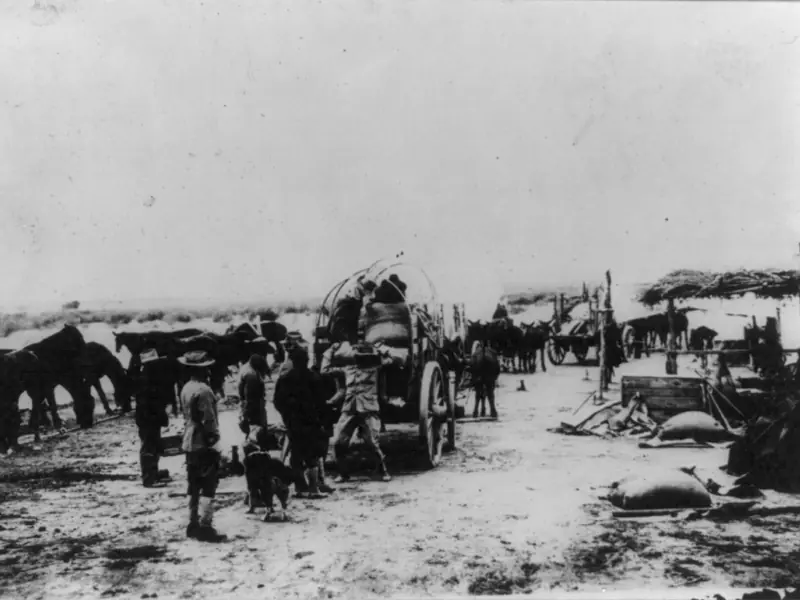
Following the Cherokee War of 1760-62 and continued conflict through the Revolutionary War era, the South Carolina militia built Oconee Station in 1792, a blockhouse meant to protect settlers from Cherokee and Creek raids. The Cherokee ceded their remaining South Carolina land under pressure in 1816, and settlers gradually moved in. William Richards built a home on the site in 1805 and later converted the old blockhouse into a kitchen for his family. Both structures still stand today as Oconee Station State Historic Site.
A Colony Born From Revolution
The immediate cause of Walhalla’s founding wasn’t just Charleston’s oppressive summer heat, though that was part of it. The German Colonization Society of Charleston, founded in 1848, formed specifically to help a wave of German immigrants who had fled the failed German revolutions of 1848-1849, many of them political refugees rather than simple economic migrants. Leading the effort was Johann Andreas “John” Wagener, who had immigrated from Bremerhaven to Charleston back in 1833 and built a career as a newspaper editor and businessman, alongside fellow trustees Claus Bullwinkel, John C. Henckel, Jacob Schroder, and Christopher F. Seeba.
Founding the Town
After advertising for suitable land, the Society was approached by the Reverend Joseph Grisham of West Union, in the old Pickens District, who offered a tract for sale. On December 24, 1849, the Society purchased 17,859 acres from Grisham for $27,000. Interestingly, the area’s largest settlement at the time wasn’t yet Walhalla at all, it was Tunnel Hill, a community that had grown up above the Blue Ridge Railroad’s mountain tunnel project.
On March 26, 1850, Society members met in Charleston to draw lots for their new land. Each member received a half-acre lot on Main Street, an acre on North or South Broad Street, and a fifty-acre farm beyond town, laid out across eight four-acre sections on a ridge at the foot of Stumphouse Mountain, on either side of a long, wide Main Street, deliberately oriented to avoid direct summer sun. The first German immigrants arrived shortly after, and by 1854 the town’s German population had grown to roughly 400. Walhalla was formally incorporated on December 19, 1855.
The colonists named their new home Walhalla after the hall of the gods in Norse mythology, “the pleasant hall, the real heaven of our German forebearers,” inspired by the dense forests and waterfalls surrounding them, and the name has also been translated as “Garden of the Gods.” One of the town’s first structures was what became St. John’s Lutheran Church, later placed on the National Register of Historic Places in 1980. Walhalla also briefly hosted three colleges: Newberry College relocated here in 1856 before returning to the town of Newberry in 1877, Adger College operated under the Presbytery of South Carolina until it closed in 1886, and Walhalla Female College opened in 1877 and closed about a decade later.
War and a New County Seat
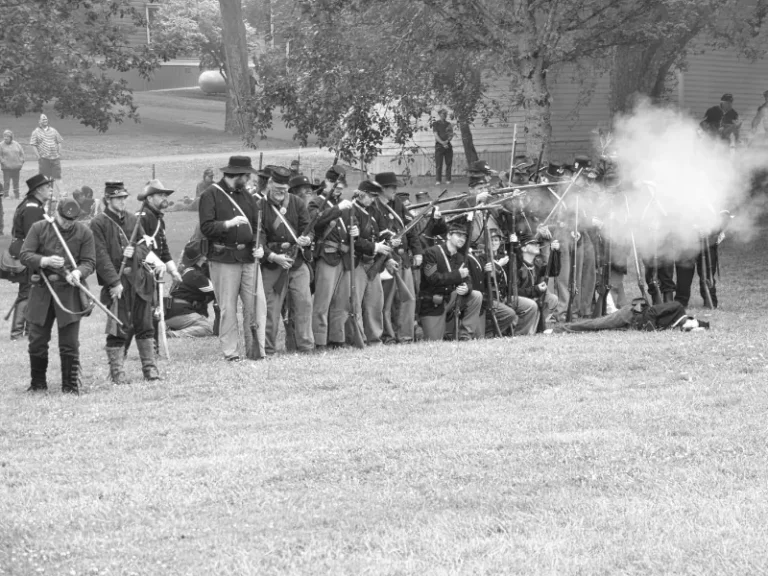
The Walhalla Riflemen, a local militia organized in 1852, were among the first units to volunteer for Confederate service when the Civil War began. During the war, the town became a haven for refugees fleeing the lowcountry, and nonresidents needed certificates from the town council just to remain within town limits.
In 1868, the state legislature formed Oconee County by dividing it out of Pickens County, and designated Walhalla as the new county’s seat. The honor brought a wave of new residents, mostly former British-descended settlers from surrounding counties like Pickens and Anderson, along with the Keowee Courier newspaper, which relocated to Walhalla that same year. The influx began diluting what had been an overwhelmingly German town.
The Railroad That Almost Was
Walhalla’s founders believed the town’s location at the edge of the mountains would drive growth, and for a time the Blue Ridge Railroad delivered on that promise, bringing visitors and commerce as construction pushed toward a series of tunnels through the mountains above town, the same project that had made Tunnel Hill the area’s biggest settlement before Walhalla even existed. That tunnel work produced what is now known as Stumphouse Tunnel. Financial trouble and the Civil War stopped the railroad before it ever extended past Walhalla, but the town still became a waypoint for travelers heading west into the mountains by stagecoach. Many stayed at the Biemann Hotel and took in a show at the Kaufmann Opera House before continuing their journey.
Industry Reshapes the Town
As the railroad’s promise faded, Walhalla’s economy turned toward manufacturing. The Walhalla Cotton Mill, established in 1907, put local water power and rail access to work processing and weaving cotton, while the Oconee Knitting Mills, organized around 1900 with $15,000 in capital, produced hosiery. The pattern continued through the mid-20th century as Avondale Mills, Nason (electrical switches), Oxford Industries (apparel), and Torrington Bearings all established operations in town. Where the town’s growth had once come almost entirely from German settlers, this new manufacturing base drew workers from well beyond the original colony, and Walhalla’s once-dominant German character gradually gave way to a more broadly Southern, industrial small town.
A Modern Small Town
In 1988, Walhalla elected Gladys Pepper as its first, and to date only, female mayor. Today Ellicott Rock, Keil Farm, the Oconee County Cage, Oconee Station and the Richards House, St. John’s Lutheran Church, the Stumphouse Tunnel Complex, and the Walhalla Graded School are all listed on the National Register of Historic Places, a physical record of nearly two centuries of the town’s history still standing. As of the 2020 census, Walhalla’s population was just over 4,000.
Heritage Today
Walhalla’s day-to-day German influence has faded, but the town still leans into that heritage each October with Walhalla Oktoberfest, held annually since 1979 and presented by a local nonprofit, now one of the largest events on the City’s calendar. The Wanderweg Greenway, a paved walking and biking trail along West South Broad Street, takes its name directly from the German word for “wandering path.” Downtown, historic homes, churches, and the restored Walhalla Depot and Civic Auditorium still trace the outline of the town the German Colonization Society laid out in 1850, on land that was Cherokee territory long before any of them arrived.
Museums in Walhalla
Explore the area’s history, Cherokee heritage, and military service in person.